


Studies in Ethnomusicology
What is Ethnomusicology?
Ethnomusicology is the study of how people make music in varying cultural environments around the world. We explore diverse musical systems, learning methods, and creative processes in traditional, popular, and art music practices both at home (wherever that may be) and in more distant locales. We try to understand how varying beliefs, values, social issues, politics, and other extra-musical factors influence musical processes and musical meaning. We also examine the importance of music and music-making in our lives and in society, both to improve our general understanding and to enable us to have a positive impact in our communities. We focus within, between and beyond national borders and ethnic boundaries. We examine historical and contemporary modes of intercultural contact, conflict, exchange, and sharing, and the resulting flourishing of musical innovations as well as efforts of musical preservation. We analyze how instruments and sounds are shaped by and influence these extra-musical phenomena. We also explore how expression, communication, and creativity—in their myriad manifestations—are common needs shared by all humans. Our primary expertise is on ethnography of music as social practice, but we are also open to combining this focus with approaches from music analysis, music history, music education, practice-based research, and other emerging methods.
Study and Research Opportunities in Ethnomusicology
Degree Programs
Ethnomusicology can be studied at the University of Würzburg at all levels from Bachelor’s to Master’s to PhD to Habilitation. For more details, visit:
Bachelor of Arts Minor in Ethnomusicology (60 ECTS)
Master of Arts in Ethnomusicology (single-subject 120 ECTS and double-subject 45 ECTS)
Habilitation and Postdoctoral research in Ethnomusicology
Tuition is free for all degree students, regardless of residency or nationality.
Opportunities for non-degree students
Students from other programs at the university, as well as from our partner institutions (e.g., HfM, THWS) are welcome to take ethnomusicology classes if capacity allows. Non-degree guest students from outside the university may take individual classes with the permission of the instructor for a fee. Interested individuals may contact the class instructor directly or the program leaders Prof. Hill and Dr. Wenz. Current course offerings are posted on the institute’s website under Studium, Lehrveranstaltungen am Institut für Musikforschung.
The Ethnomusicology Team: Instructors
The Ethnomusicology study programs are led by Prof. Juniper Hill and Dr. Clara Wenz (during her parental leave, Dr. Wenz is temporarily replaced by Fabio Dick). Additional courses are offered by colleagues from the Institute of Music research, including classes on organology and audio-video recording & editing by Dr. Oliver Wiener and music analysis by Prof. Fabian Moss, as well as by postdoctoral fellows Dr. Loab Hammud, Dr. Toyin Samuel Ajose, and Dr. Mauro Windholz.
Four rotating adjunct/guest instructors per semester expand our offerings with practical and/or academic expertise from around the world. Recent guest instructors include André Mabiala in West and Central African music, Anja Günther in Klezmer music, Carlos Patzi and Rainer Christian Rosenbaum in Bolivian music, Christian Poske in South Asian music, David Moran in Flamenco music, David Saam and Franz Josef Schramm in Franconian (German) music and dance, Joao Eduardo Farias de Araujo in Brazilian Pandeiro music, Mohcine Ramdan and Aktham Abou Fakher in Arabic music, and Yalda Yazdani in Persian/Middle Eastern music.
Ethnomusicology students are also encouraged to branch out in interdisciplinary directions through classes offered by our partner programs in Musicology, Music Education, Ethnology/Folklore, Political Science and Sociology, Media Studies, Diversity Management, Museum Studies, and multiple regional studies programs (e.g., American, British, East Asian, Irish, South Asian, and Slavic studies).
Affiliated/visiting scholars include Prof. Guilnard Moufarrej, Dr. Cornelia Günauer, and Professor emeritus Dr. Max Peter Baumann.
Ethnomusicology Events
Every semester, we invite numerous local and international scholars and artists to give guest seminars, workshops, and concerts. The current program can be found on the Institute website under Aktuelles, Events des Lehrstuhls für Ethnomusikologie. Peruse some of our past events here:
Program Summer 2026 (PDF)
Program Winter 2025/26 (PDF)
Program Summer 2025 (PDF)
Program Winter 2024/25 (PDF)
Program Summer 2024 (PDF)
Program Winter 2023/24 (PDF)
Program Summer 2023 (PDF)
Program Winter 2022/23 (PDF)
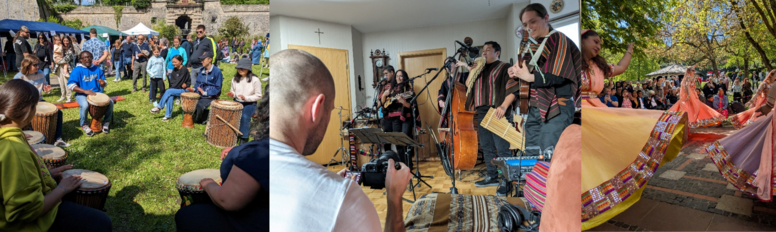
Students also have opportunities to participate in local cultural events, such as the Frühling International festival, GloW Global Würzburg festival, and Woche Gegen Rassismus program.
Location and Facilities
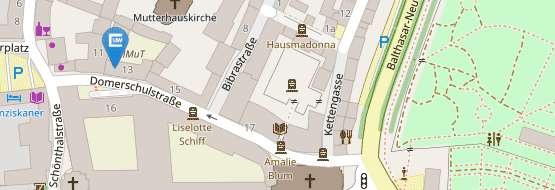
The Würzburg Institute of Music Research is located in the city center at Domerschulstr. 13, across from the Neubaukirche and around the corner from the Würzburg Music University. We also hold classes and house our musical instrument collection in the Würzburg Residence, a UNESCO world heritage site. Key facilities include the Institute’s Music Library, Computer Center, and Musical Instrument and Media Study Collection. The Ethnomusicology program also maintains a collection of audiovisual field recording equipment that students and researchers may borrow for their projects, as well as a team room for doctoral and postdoctoral scholars.
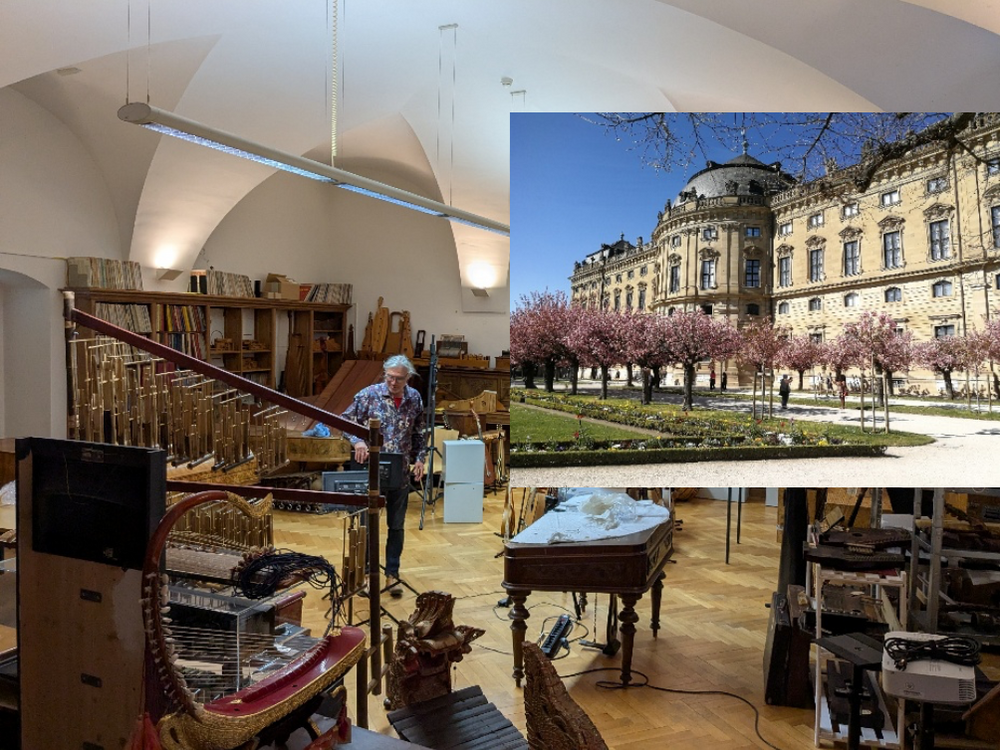
The city of Würzburg (population circa 130,000) is it idyllically situated in the Main River Valley in the Franconian wine region. It is impressively diverse with over one-third of the population holding migration backgrounds from around the world. In the warmer months, the city enjoys an active festival culture (e.g., Africa Festival, Mozart Festival, Umsonst&Draußen). To learn more about the diverse music cultures in Würzburg, see our Music of Our Neighbors Project.
Würzburg is well connected on the ICE high-speed rail lines, including a direct link to the Frankfurt International Airport.